Comparative Analysis of Injury Rates in Professional Racquet and Team Sports and Their Impact on Betting Lines
Yves Keller · Aug 20, 2026
Comparative Analysis of Injury Rates in Professional Racquet and Team Sports and Their Impact on Betting Lines
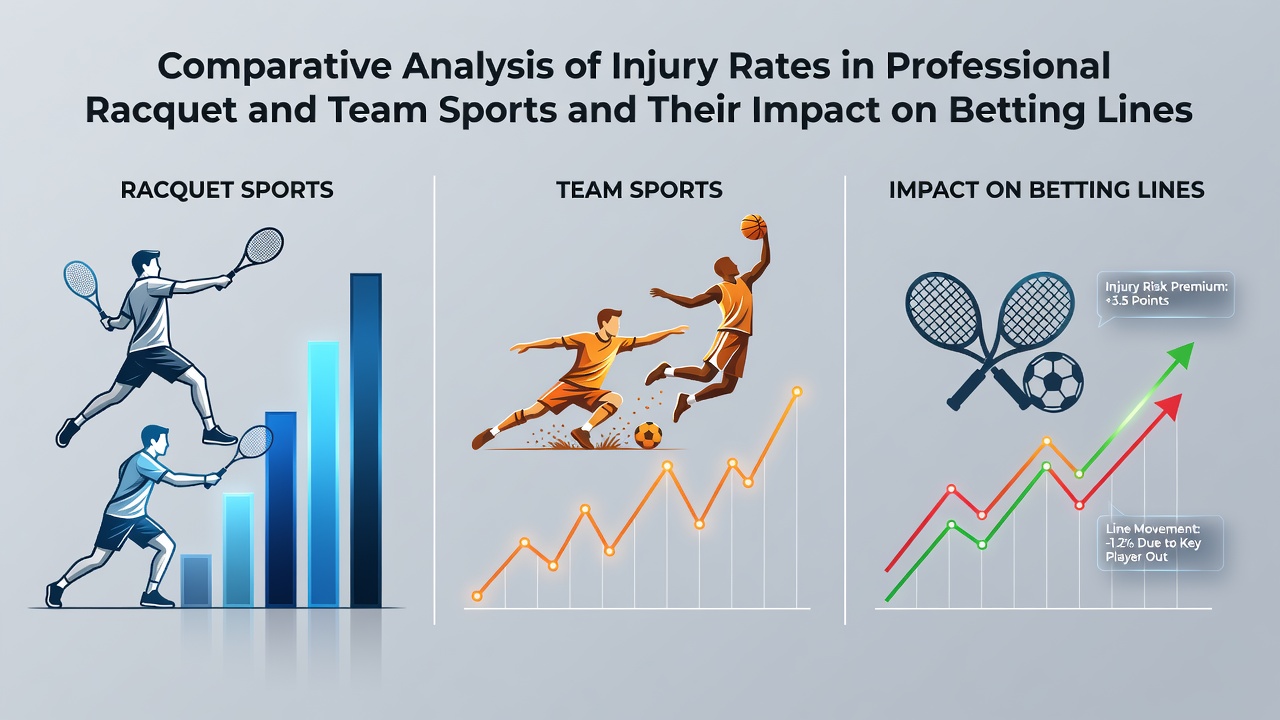
Professional sports data collected through 2025 and into the summer of 2026 reveals clear differences in injury patterns between racquet sports and team sports, differences that directly shape how bookmakers set and adjust betting lines across major events. Racquet disciplines such as tennis and squash produce repetitive strain injuries at higher rates while team sports like soccer, basketball, and ice hockey generate more acute traumatic injuries from contact and rapid directional changes.
Injury Patterns Across Racquet Sports
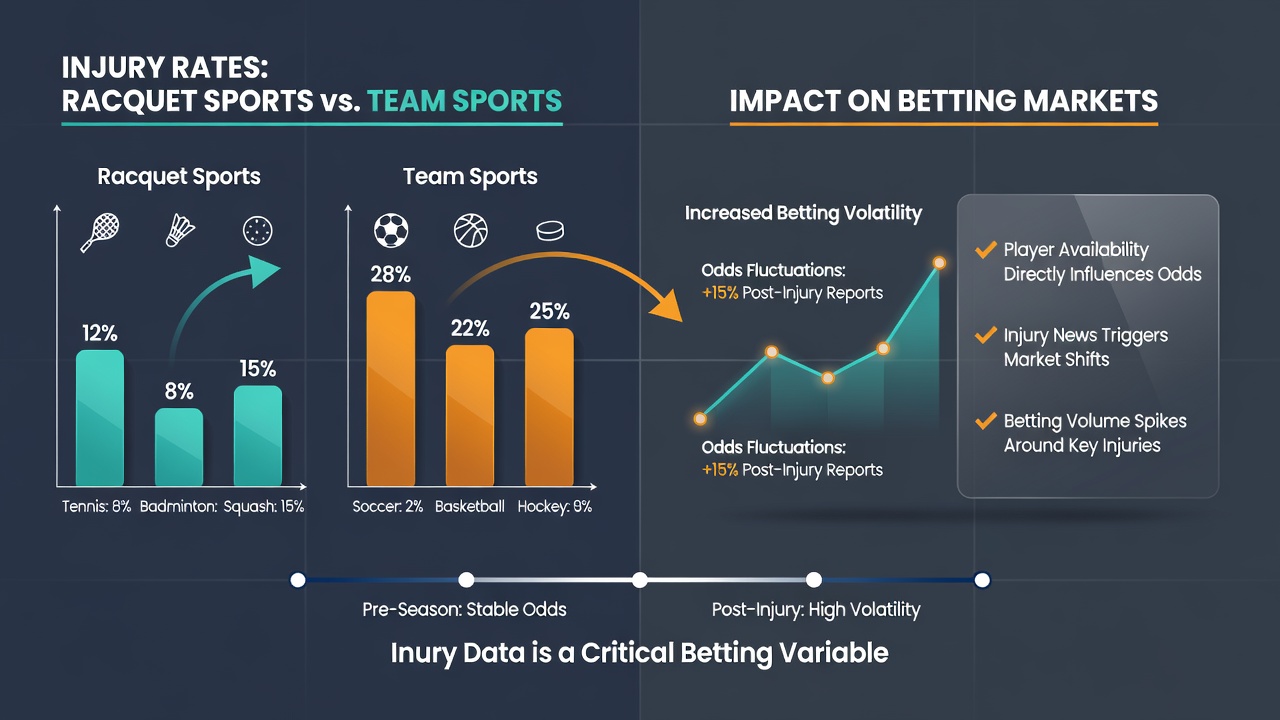
Studies tracking elite players show that overuse conditions dominate in racquet sports because athletes perform thousands of repetitive motions during matches and training blocks. Tennis players experience elbow tendinopathy and shoulder issues at rates exceeding 30 percent annually according to surveillance programs run by national tennis federations. Squash and badminton add lower-limb stress fractures and ankle sprains because of constant lateral movement on hard surfaces. These injuries often develop gradually so medical staff can monitor them closely before events, which means teams sometimes rest players proactively rather than risk mid-tournament withdrawals.
Injury Patterns Across Team Sports
Team sports produce a different profile dominated by contact-related trauma. Soccer data from European leagues indicates anterior cruciate ligament tears occur at roughly 0.8 per 1000 player hours while concussions appear more frequently in ice hockey and American football. Basketball contributes high rates of ankle and knee sprains from jumping and cutting. Because these injuries arise suddenly during matches, they create immediate roster changes that betting markets must react to in real time. August 2026 pre-season reports from several North American leagues already highlight elevated soft-tissue injury numbers linked to condensed schedules and heat exposure during training camps.
Direct Comparison of Rates and Severity
When researchers align datasets from the same time periods, team sports show higher overall injury incidence yet racquet sports display longer average recovery times for certain chronic conditions. One multi-year analysis found that professional tennis players miss an average of 18 days per injury while soccer players average 12 days, although soccer teams rotate larger squads so individual absences affect match outcomes less dramatically. The contrast matters for betting because markets price both the probability of a player appearing and the expected performance drop when a key athlete returns after recovery. Observers note that racquet sports injuries cluster around specific joints and tendons, creating predictable long-term absences, whereas team sport injuries scatter across the body and often cluster during high-contact periods of the season.
How Injury Data Shapes Betting Markets
Betting operators integrate medical updates into models that recalculate odds within minutes of confirmed absences. When a star tennis player withdraws from a grand slam due to a recurring elbow issue, moneylines shift sharply while set and game handicaps adjust to reflect replacement players. In team sports the same information triggers line movements on totals because missing scorers or defenders alter expected goal or point outputs. Data from the Centers for Disease Control and Prevention and parallel reports issued by the Australian Institute of Sport demonstrate that markets incorporating real-time injury feeds achieve tighter spreads and lower variance in closing lines. Bookmakers also track historical recovery curves so they can anticipate when athletes return below full fitness, an adjustment visible in player prop markets during the 2026 season.
Regional and Seasonal Variations
European soccer leagues report elevated muscle injury rates during winter months while North American basketball shows spikes in load-related knee problems toward the end of long regular seasons. Racquet sports exhibit steadier year-round patterns because indoor facilities reduce weather variables. These seasonal trends feed into betting algorithms that weight recent injury clusters more heavily than older data. August 2026 schedules already show several overlapping tournaments and league openers, increasing the volume of simultaneous injury news that traders must process before odds stabilize.
Conclusion
Comprehensive injury surveillance continues to refine how professional sports betting markets price risk. Racquet and team sports each generate distinct injury signatures that produce measurable effects on odds, and operators that integrate verified medical data maintain competitive edges in line accuracy. As more granular tracking technology emerges, the relationship between documented injury rates and live betting adjustments will likely grow even tighter across both categories of sport.