Cross-Border Schedule Impacts on Recovery Metrics in WTA and ATP Majors Alongside NHL Road Trips
Yves Keller · Sep 18, 2026
Cross-Border Schedule Impacts on Recovery Metrics in WTA and ATP Majors Alongside NHL Road Trips
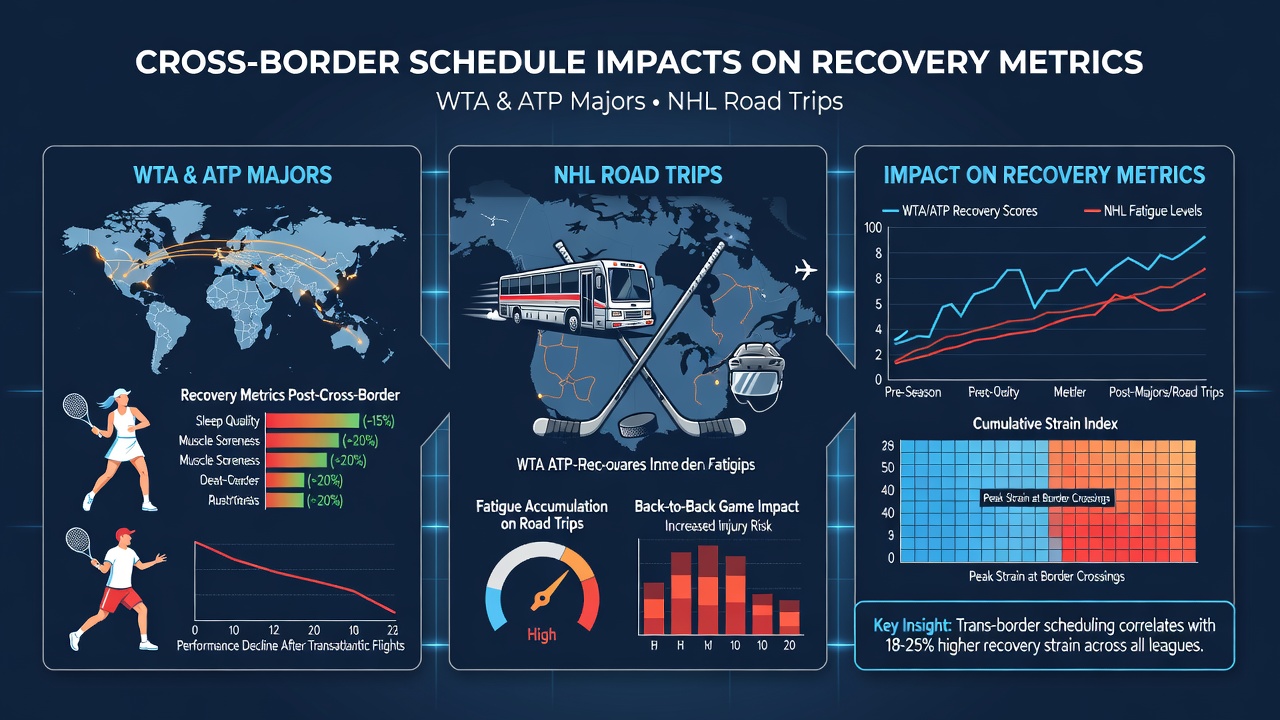
Professional tennis players competing in WTA and ATP majors face extensive cross-border travel that directly shapes recovery timelines between matches, while NHL teams manage frequent US-Canada border crossings during road trips that stretch across multiple time zones. Data collected from tournament schedules and league records show that athletes in both sports encounter measurable shifts in sleep patterns, training loads, and performance outputs when moving between continents or countries within short windows. Researchers tracking these variables note consistent patterns where recovery windows shrink as travel distance increases, particularly during the Australian Open swing in January and the US Open series in late summer.
Grand Slam events require participants to relocate across hemispheres for events such as the Australian Open, Roland Garros, Wimbledon, and the US Open, with flight durations often exceeding 15 hours for European-based players heading to Melbourne. Studies from sports medicine programs in Australia and Canada indicate that circadian disruption from these journeys elevates markers of muscle fatigue and reduces serve accuracy by measurable percentages in the first few days after arrival. ATP and WTA medical teams log these effects through wearable devices that record heart rate variability and sleep duration, revealing that players who arrive fewer than 72 hours before their opening match experience slower return to baseline recovery scores compared with those who build in extra acclimation days.
Travel Demands Across Tennis Majors
ATP and WTA calendars place several high-stakes tournaments in succession across different regulatory environments and climate zones, forcing competitors to adapt quickly to new recovery protocols. When the tour moves from European clay courts to North American hard courts in the summer months, athletes must recalibrate hydration and sleep strategies while managing jet lag that lingers for several days. Figures released by tournament organizers show that players who cross multiple time zones between events report elevated ratings of perceived exertion during practice sessions, and these self-reported data align with objective GPS tracking that captures reduced court coverage speeds in early rounds.
September 2026 schedules already list overlapping preparation events in Asia and North America ahead of the US Open, creating additional cross-border segments for athletes who compete in both regions. Observers tracking these calendars note that recovery metrics dip most sharply when the interval between matches falls below 48 hours after long-haul flights, a situation that occurs regularly during the Asian swing leading into the final major of the year. WTA and ATP performance databases document these trends through aggregated match statistics that compare win rates and rally lengths before and after intercontinental travel.
NHL Road Trip Patterns and Border Crossings
NHL franchises based in Canada and the United States complete dozens of road games each season, many of which involve crossing the international border and shifting between Eastern, Central, and Pacific time zones. League tracking systems record average road trip lengths of five to eight days, during which teams play three or four games in different cities while adjusting to new hotel environments and arena conditions. Canadian research institutions studying professional hockey have measured declines in reaction time and skating velocity among players who accumulate more than three consecutive nights away from home, with data showing partial rebound only after a full day of rest back at the team facility.
Border processing requirements add logistical layers that compress available recovery time, especially on trips between cities such as Toronto, Detroit, Buffalo, and Montreal. NHL analytics platforms compile shift-by-shift data that reveal reduced average ice time effectiveness during the second and third games of extended road swings, correlating these dips with accumulated travel fatigue rather than opponent strength alone. Teams that incorporate light training sessions timed to the destination time zone upon arrival demonstrate faster stabilization of recovery markers according to internal monitoring reports shared with league medical committees.
Comparative Recovery Data Across Both Sports
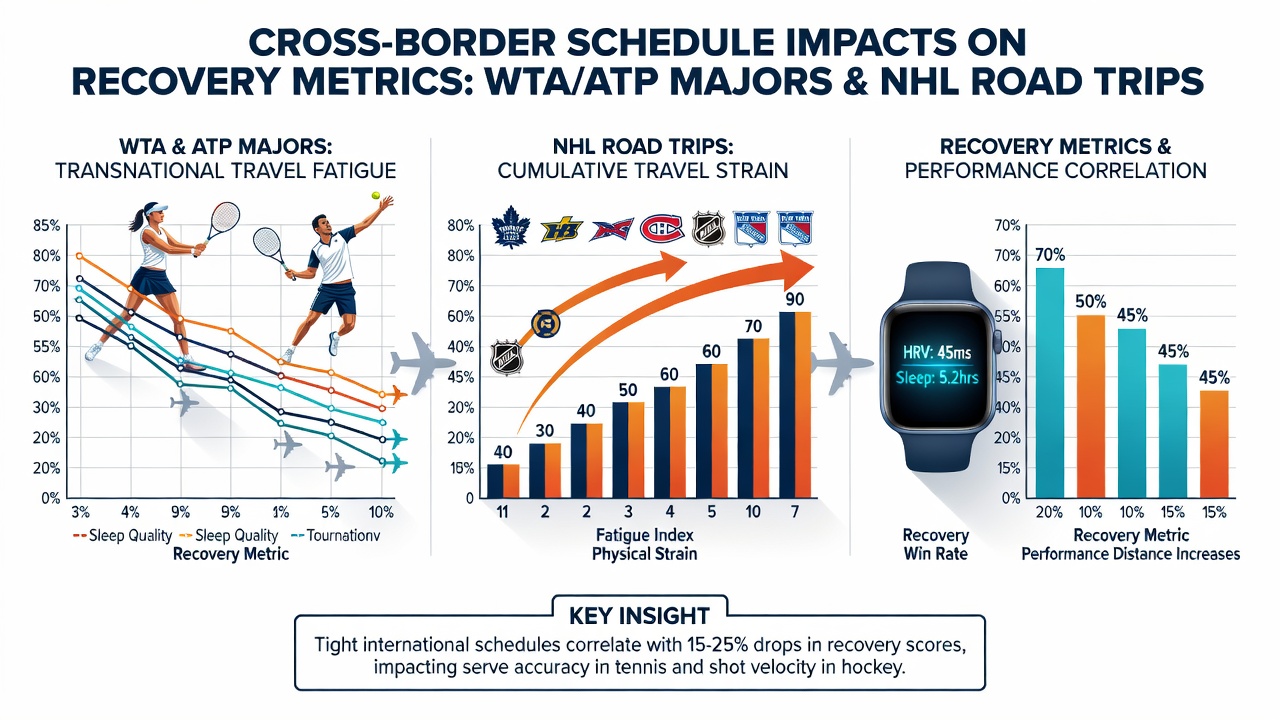
Side-by-side analyses of tennis and hockey datasets highlight shared vulnerabilities when schedules force rapid relocation across borders. Tennis players and hockey skaters both exhibit temporary reductions in high-intensity output following long-distance travel, though the specific metrics differ by sport: tennis studies focus on serve speed and unforced error rates, while hockey research tracks shot attempts and defensive zone time. Organizations such as the International Ice Hockey Federation and academic groups at North American universities have published joint findings showing that athletes in both disciplines require at least 48 hours to restore baseline neuromuscular function after crossing more than four time zones.
September 2026 calendars for both tennis majors and NHL preseason games include several tightly packed segments that test these recovery thresholds. Performance logs from prior seasons indicate that teams and players who maintain consistent nutrition and sleep hygiene protocols during transit post smaller drops in key statistics than those relying on standard travel routines. Data aggregated across multiple seasons continue to inform scheduling adjustments proposed by tournament directors and league officials seeking to balance competitive demands with athlete welfare considerations.
Conclusion
Cross-border elements embedded in WTA, ATP, and NHL schedules produce measurable effects on recovery metrics that persist across multiple events each year. Tournament and league records demonstrate consistent links between travel volume, time zone changes, and temporary performance adjustments, prompting ongoing refinements in preparation strategies and monitoring technologies. Continued collection of objective data from wearable devices and match analytics supports evidence-based adjustments to future calendars while maintaining the integrity of international competition.