How Venue Construction Materials Alter Ball Dynamics and Scoring Outputs Across European Soccer Pitches and American Basketball Courts
Clara Schmidt · Oct 2, 2026
How Venue Construction Materials Alter Ball Dynamics and Scoring Outputs Across European Soccer Pitches and American Basketball Courts
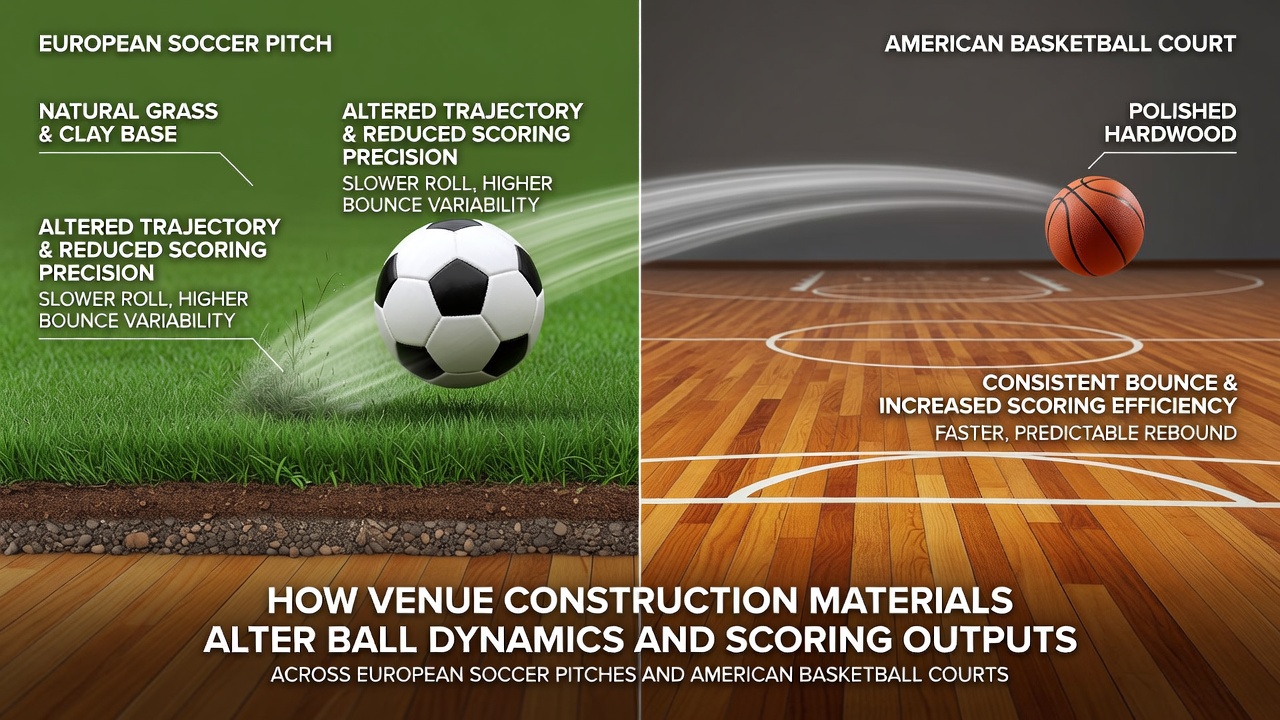
Construction materials used in sports venues shape how balls move across surfaces, which in turn affects scoring patterns in European soccer leagues and American basketball competitions, according to multiple studies from sports engineering groups. Natural grass pitches common across the Bundesliga and Premier League feature varying root structures and soil compositions that determine ball speed and friction levels, while hybrid turf systems installed in many top venues combine synthetic fibers with organic grass to stabilize playing conditions throughout the season. Researchers tracking ball trajectories have documented how these surfaces alter rebound angles and rolling distances, leading to measurable differences in pass completion rates and shot accuracy during league play.
Surface Composition Effects in Soccer Venues
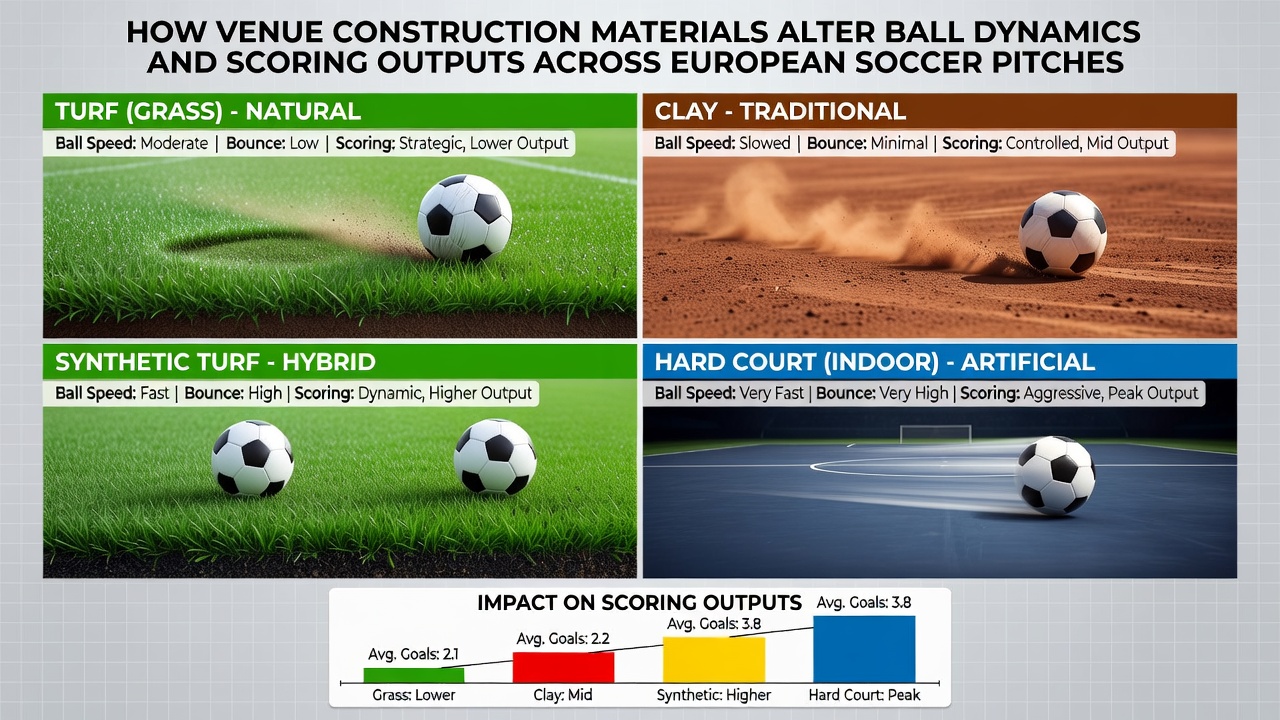
European soccer pitches rely on specific grass species such as perennial ryegrass and Kentucky bluegrass blends that respond differently to weather and maintenance routines, creating variations in surface hardness that influence ball behavior during high-speed play. Data collected from matches in October 2026 across major leagues shows that pitches with higher sand content in the root zone allow faster ball roll, which correlates with increased through-ball attempts and slightly elevated goal tallies in away fixtures. Artificial turf installations approved under FIFA standards incorporate polyethylene fibers over shock pads, and these systems produce more consistent bounce compared with natural grass while reducing variability caused by rain or heavy use.
Hybrid pitches, which dominate many elite stadiums in Germany and Spain, integrate synthetic reinforcements that limit divot formation and maintain uniform ball dynamics across the full ninety minutes of regulation time. Observers note that these materials decrease the frequency of unpredictable high bounces, allowing midfielders to execute longer passes with greater reliability, yet they also increase overall pace that can lead to more counter-attacking opportunities and higher scoring outputs in domestic cup competitions.
Scoring Patterns Linked to Pitch Materials
Statistical reviews from UEFA-affiliated research programs indicate that venues with reinforced hybrid surfaces record average goal totals per match that exceed those on traditional grass by small but consistent margins, particularly during congested fixture periods. Ball speed measurements reveal that lower friction on hybrid turf enables shots from distance to retain velocity longer, resulting in more goals scored from outside the penalty area in leagues that employ these surfaces regularly. European clubs that transitioned to FIFA-certified artificial pitches in recent years have reported shifts in expected goals models, with data showing improved conversion rates on low-driven crosses because the ball travels flatter and faster across the surface.
Materials Used in Basketball Court Construction
American basketball courts in professional and collegiate settings primarily use hard maple wood selected for its density and uniform grain, which provides predictable friction and energy return during dribbling and shooting sequences. Surface finishes applied to these maple boards include multiple coats of polyurethane that control grip levels, and facilities managers adjust these coatings based on humidity readings to keep ball response consistent across games. Research conducted at North American universities has examined how different sealant formulations alter the coefficient of restitution, the measure of how much energy the ball retains upon impact with the floor.
Synthetic court options, increasingly installed in training facilities and some high school venues, combine acrylic coatings over concrete or asphalt bases, delivering higher rebound heights than traditional wood while requiring less maintenance in variable climates. These materials produce faster ball speeds that influence transition offense strategies, as documented in performance analyses from NCAA conferences where synthetic surfaces appear more frequently.
Basketball Scoring Outputs and Court Surfaces
Performance data compiled by league statisticians demonstrate that maple courts with specific finish textures correlate with higher field goal percentages on mid-range jump shots because the ball's grip allows for better control during release. In contrast, courts finished with higher-gloss coatings show slight increases in turnovers due to reduced friction during quick direction changes, a pattern observed across multiple NBA seasons. Studies tracking three-point shooting efficiency reveal that surfaces engineered for optimal energy return can add small increments to successful long-range attempts when shooters exploit the consistent bounce characteristics.
Regional differences emerge when comparing wood courts in the eastern United States, where humidity control systems maintain stable conditions, against western facilities that occasionally use supplemental treatments to counteract drier air. These environmental adjustments interact with material properties to shape scoring distributions, with evidence from conference reports showing elevated assist-to-turnover ratios on courts that preserve moderate friction levels throughout extended game schedules.
Comparative Observations Across Sports
Analyses that span both European soccer and American basketball highlight how material choices prioritize different performance attributes: soccer venues emphasize controlled roll and reduced injury risk through shock absorption layers, whereas basketball courts focus on energy return and grip consistency that support vertical leaping and rapid lateral movements. Cross-sport comparisons conducted by international sports science organizations indicate that venues investing in advanced surface technologies achieve more stable scoring outputs over time, reducing the influence of external variables such as weather or heavy usage patterns.
Conclusion
Venue construction materials exert measurable influence on ball dynamics and resulting scoring patterns in both European soccer and American basketball environments. Data gathered from league matches and laboratory testing continues to guide decisions about surface specifications, with ongoing monitoring of performance metrics informing refinements that balance playability, safety, and consistency across professional competitions.